I. The forest, and the discipline that came out of it
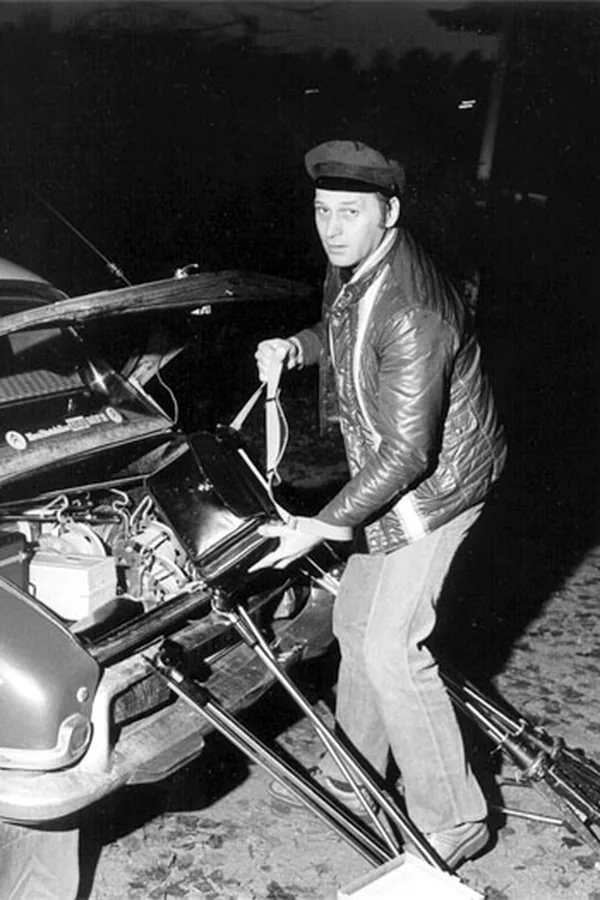
Gert Palmcrantz began recording music professionally in 1959. In the early 1970s he was sent north to document the last of the folk musicians in the Norrland forests — fiddlers, singers, the older repertoire that would not survive another generation. The equipment of that era was not portable. Dragging a full studio into the woods was not feasible, so he took only what he could carry: two Neumann U47 microphones, a Nagra IV-S tape machine, and headphones.
Everything else — the isolation booths, the multitrack, the second chances — stayed behind. Whatever happened in front of those two microphones is what went to tape.
What he learned from that limitation was not a technical lesson. It was a human one. When musicians know a recording cannot be edited or patched afterwards, they cannot afford to play only their own part. They have to listen to one another. They have to adjust in real time. They have to find the compromise — a willing one — that lets the ensemble actually work as an ensemble. That compromise, not any individual's precision, is what gives a performance its life.
II. 1976 — a small proof
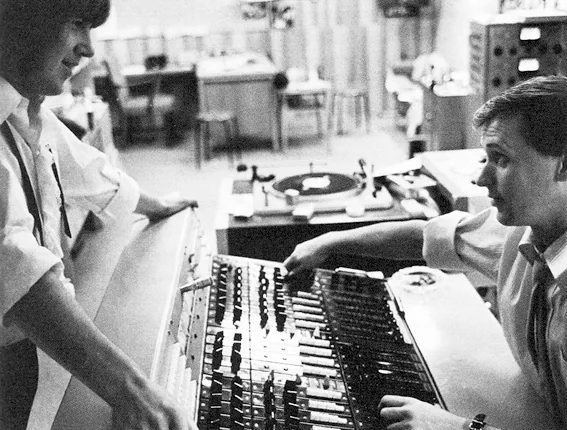
A few years later, in December 1976, Gert brought the same two microphones and the same reel of ¼" tape to a small restaurant in Stockholm's old town called Stampen. He was there to record a jazz quintet — Arne Domnérus on alto, Bengt Hallberg at the piano, Georg Riedel on bass, Egil Johansen on drums, Lars Erstrand on vibes — playing, essentially, for the dinner crowd. A few microphones. One night. No overdubs, no separation, no second take.
The record that came out of that night, Jazz at the Pawnshop, has been in continuous print for nearly fifty years. It is on every audiophile short-list ever written. What the method produced turned out not to be a limitation of the technology of 1976. It was the whole point.
III. 2009 — the label
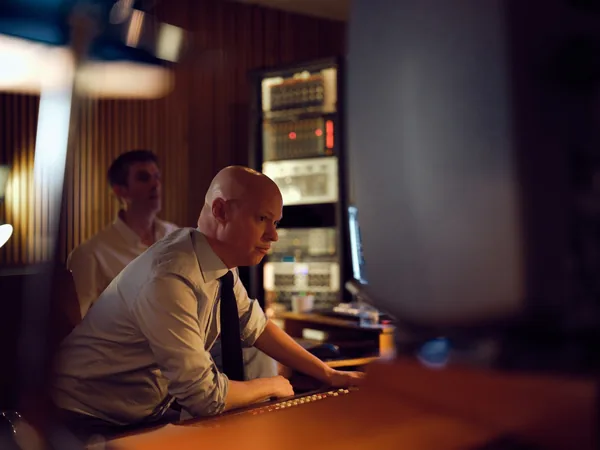
In 2009, Gert's son Eric Palmcrantz founded Figaro Music. The intent was straightforward and — in a decade that had already abandoned it — quietly radical: to keep making records the way his father had made them. Not out of nostalgia. Out of the same argument. Musicians who cannot hide behind a fix play with more trust, more generosity, and more of themselves. That is what the listener hears, even if they never know why.
Every Figaro record — from Saleya in 2010 through Deusa in 2025 — is captured live to a Studer ¼" tape machine, in one unbroken performance. No edits. No overdubs. Lacquers are cut by Janne Hansson at Atlantis Studios in Stockholm. Vinyl is pressed at Schallplattenfabrik Pallas in Germany. Editions are small, usually between 300 and 1,000 copies.
The catalogue is deliberately narrow. Not every title is still in print. Each release is a document of a specific room, a specific afternoon, and a specific group of musicians agreeing to trust one another for an hour.
The question is never whether it is perfect. The question is whether it is alive.
IV. What has not changed
The tape machine is still Swiss. The microphones — often the ones commissioned by Didrik de Geer, or the same Neumanns Gert used — are still hand-picked for the room. The lacquer is still cut in Stockholm, in real time, by an engineer who has been doing it for forty years. The pressing plant is still Pallas.
None of this is preservation for its own sake. It is the shortest known route between a performance and a listener's chair.